The Throw-In Who Became a Closer
After 18 months in injury limbo, Saddiq Bey has emerged as the Pelicans’ most efficient clutch weapon and their next big financial decision.
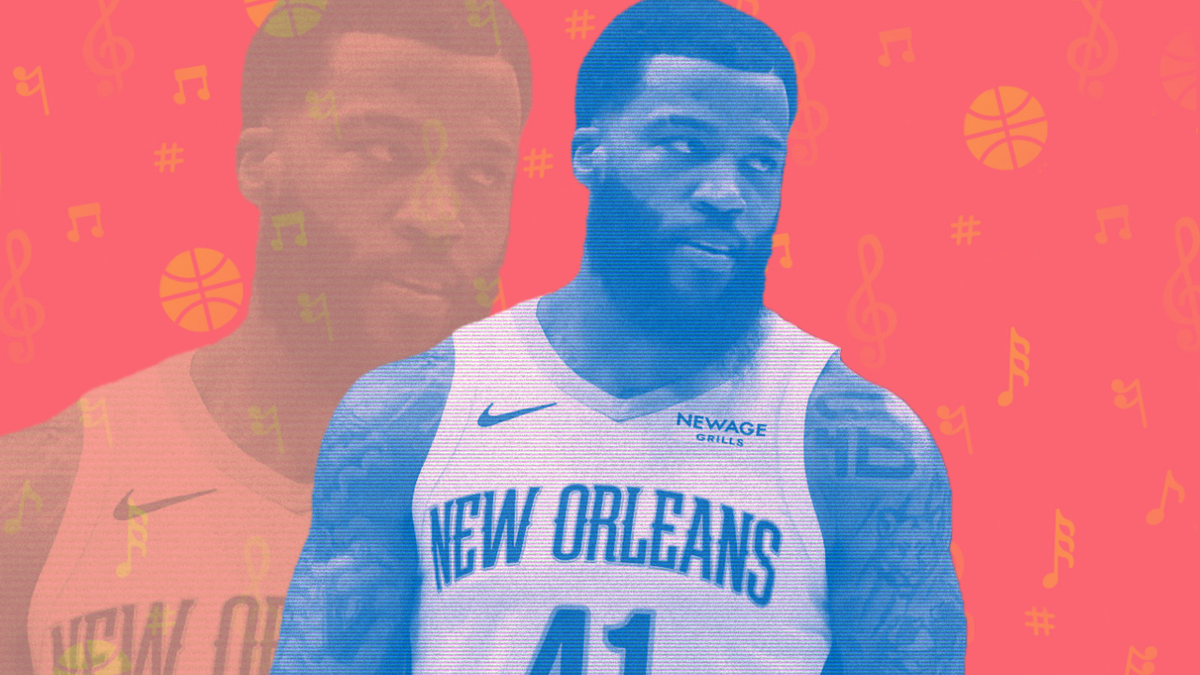
MEMPHIS — Fifty-nine seconds left. A two-point game. The FedEx Forum crowd on its feet, roaring for a stop. Herb Jones had faked the pass to Derik Queen rolling down the middle, freezing the defense for just a heartbeat, and then whipped it to the corner in front of the Grizzlies’ bench, where Saddiq Bey was waiting.
Bey caught, squared, and let it fly.
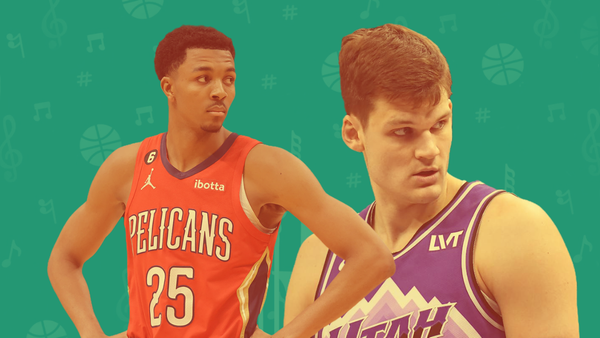
The three-pointer splashed through, capping a 36-point night and 19-point fourth quarter for Bey. The normally cool forward then turned to the Grizzlies’ bench, letting loose a volley of trash talk. Memphis, who had led by as as many as 13 late into the game, was summarily sent home by a guy many in the league considered a throw-in in the CJ McCollum and Jordan Poole transaction.
The throw-in had become a keeper.
‘The Longest I Ever Been Without Playing’
That moment in Memphis didn't happen by accident. It was almost two years in the making. Bey suffered a torn ACL in March of 2024, which stole his entire previous season. It would be eighteen months before Bey would see NBA action again. Eighteen months is a long time to sit with yourself.
“It’s the longest I’ve ever been without playing basketball, man.” Bey reflected recently. “It’s been so long, you don’t realize there’s certain things that were not in that rhythm like a normal NBA season. Being out for over a year and a half is tough, man.”
But Bey never lost faith and never lost sight of his goal. Even in the most taxing days of rehab, Bey leaned on his spirituality to keep him going. “God. Man I think he really humbled me in that situation,” Bey said describing what kept him going. “I’ve never not played for that long and he really sat me down… And I think during that time, I had to rely on prayer. And so I knew when I had an opportunity to play again, I was going to try to make the most of it".
It’s an opportunity he doesn’t take for granted. "I tried to just be ready for everything. It's a blessing to be able to play."
‘He’s Not Afraid of the Big Moment"‘
“HELL YEAH,” screamed Jose Alvarado, interrupting Bey’s center court post game interview in Memphis. Seconds later, Pelicans veteran Deandre Jordan would also interrupt with a dap. “Man of many words,” chides Jordan sarcastically. “Let’s go Saddiq!”
Bey has earned the trust and admiration of his teammates and coaching staff. So much so that now the team relies on him as a nightly contributor and closer.
When Bey first arrived in New Orleans via that July 2025 trade, staff didn’t quite know what they were getting. James Borrego, the interim head coach, had seen Bey from afar, but that was before the injury.
“He wasn’t on the board for 20 points for me,” Borrego admitted when asked if he foresaw this level of impact. “I’ve always respected him as a player. I honestly didn’t know what to expect of him. He’d been out a year. I’d always respected him from afar, but I saw him as a tough, hard-nosed, competitive player, two-way player. I knew about the 50-point game, but I didn’t know that he could consistently score 20 points a night.”
Bey is averaging 19.9 points per game since the calendar turned. The Pelicans have moved him all over the court as a versatile chess piece. A key part of Bey’s emergence has been his effectiveness in the post. Borrego has increasingly called his number there, especially out of timeouts or when the half-court offense bogs down.
The Pelicans are scoring 1.09 points per possession out of Saddiq Bey post ups, which is good for 6th most efficient among players who have at least 75 post up possessions. This has elevated Bey into one of the league’s best mismatch hunters when he has a smaller player on him.
When asked why he keeps going to Bey on the block, Borrego drew on a memory from his coaching past—one that offers a glimpse into just how highly he now regards his forward.
“It’s something that I was fortunate enough in San Antonio to have,” Borrego explained. “When we needed a big bucket or big possession, dumping it down to Tim Duncan just to settle the gym. I’ve never been a massive post-up coach. But playing through the post, there is a settling presence about playing through the post. The gym is settled. There’s spacing. And if you especially have someone that can score the basketball, it’s a settler for us. So I feel like we’re going to get a high-quality shot. Guys know where their spots are and so far he’s delivered in those moments.”
Those moments are adding up. As the season has worn on, Bey’s role has expanded beyond the post and into the fabric of everything the Pelicans do in crunch time. When games tighten and defenses load up on Zion Williamson and Trey Murphy III, the ball increasingly finds its way to Bey.
And he keeps delivering.
Since Borrego took over on November 16, no Pelican has been more trusted in the clutch than Saddiq Bey.
In situations defined as the final five minutes of a game within five points, Bey leads the team in scoring—and he’s been absurdly efficient doing it. He’s shooting 57.6% from the field in those moments, the best mark in the NBA among every player with at least 45 clutch points during that span.
Since the calendar flipped to 2026, Bey has been even better. He ranks fifth in the entire league in total clutch points, and his field goal percentage in those situations has skyrocketed to 72.2%.
This has been a development no one could have predicted to start the season. "I've learned a lot about him," Borrego said. "I didn't know he was this type of player. When I say that, I mean sort of a closer, big shot maker, big shot taker. Obviously we've seen highlights of him in the past do that, but until you have a guy internally, you don't understand their poise and focus and confidence till you have them in house. And I've learned that you can trust him. He's going to get a good shot. He's not afraid of the big moment."
That trust extends well beyond the final minutes.
“Think about what he’s done throughout 48 minutes, even before you get to the clutch or the 43 minutes leading up to the clutch,” Borrego continued. “He’s been a poised individual, a steady three-level scorer, a playmaker for us that we can count on anytime. If we call his number, I think something good is going to happen.”
But Bey is quick to deflect credit where he feels it’s due. Especially towards Borrego, who has been tasked to navigate a tough situation. “I told JB like, you know, he’s really a positive guy and tries to instill confidence in everyone,” Bey said of his interim head coach. “I told him, ‘Man, JB, you’re doing a good job too, though.’ I think sometimes people got to tell him that. He came into a tough situation, had a tough part of the season. So how him and the rest of the coaching staff has been adjusting, it’s been great to see.”
The Business of Keeping Bey
Bey’s steady play is about to force a financial conversation.
Bey is playing on the second year of a three-year, $19 million deal signed with the Wizards after his injury. With a $6.1 million cap hit for 2025-26, he is currently one of the biggest bargains in the league. This summer, Bey will enter the final year of his deal and become extension eligible.
Because of changes in the new Collective Bargaining Agreement allowing for more generous extensions, Bey is eligible for a maximum extension of four years, $93.36 million. Teams can now offer players the greater of 140% of their final year salary or 140% of the estimated average player salary (EAPS). With the EAPS for 2026-27 projecting at $14,885,000, Bey’s max first-year salary would land at $20,839,000.
Will Bey command the full $93 million? Probably not. The Pelicans shouldn’t need to go to Bey’s max to keep him. They just need to be reasonable. And recent extensions around the league provide a useful roadmap.
- Aaron Nesmith - signed a 2 year, $40,389,440 contract with the Indiana Pacers. Like Bey, he was limited to the 140% of the EAPS. If Bey prioritizes AAV and a quicker path back to free agency, a similar structure in the two-year, $40 million range could make sense for both sides.
- P.J. Washington - signed a 4 year, $88,762,436 contract with the Dallas Mavericks and offers a template for longer commitment. The Pelicans would ideally prefer to keep the AAV below $20 million on a longer deal, but Washington's contract—combined with Herb Jones' own extension—suggests the market may force their hand.
These numbers appear steep at first glance, especially for a 15-win team. But consider what happens when Bey shares the floor with New Orleans’ core. In the 16 games that Bey, Williamson, Jones, and Murphy have been healthy together under Borrego, the Pelicans are 9-7. It's a small sample, sure. But it's also proof that when this group is whole, they're competitive. They win.
A new deal starting in the $20 million range would consume roughly 12% of the cap. That's the cost of a high-end role player in today's NBA, and Bey has proven he's exactly that.
Staying Consistent
As Bey prepares to head into the back stretch of the season, his approach doesn’t change. The journey has always been about something bigger than basketball.
"I just try to grind every day," Bey said, "and just know that for me, it's like God gave me the opportunity to play again."
That perspective is what carried him through eighteen months of rehab. It’s what keeps him ready when the ball finds him at the end of games. And it’s what will keep him grounded no matter what number ends up on his next contract.
Bey was almost a forgettable detail in the trade that arrived in July.
Eight months later, he’s standing in the corner with the game on the line, ball in his hands, letting a bench full of doubters, and the NBA know they missed something.